Guides
Signs your dryer vent is blocked
September 15, 2026 · 4 min read
A dryer works by pushing hot air through wet clothes and then pushing that now humid air out of the house. If the second half of that sentence stops working properly, everything else about the machine starts to look broken.
Lint is what stops it. It rides along with the air and settles wherever the line bends, narrows or gets crushed. It builds slowly, so the symptoms arrive slowly too, which is why they are easy to explain away one at a time.
The signs, roughly in the order they appear
- Drying takes a bit longer than it used to. Easy to miss, and the first thing to happen.
- A normal load needs two cycles. This is the sign that actually gets people to call.
- Clothes come out hot but still damp. Heat is getting in and moisture is not getting out.
- The laundry room warms up while the dryer runs. Air that should have left the house is staying in it.
- Lint appears on the wall around the hood outside, or the hood flap stops opening.
- A musty smell in the laundry, from moisture that has nowhere to go.
- A burning smell. Stop using the dryer and get the line looked at.
Check one: the hood, while the dryer runs
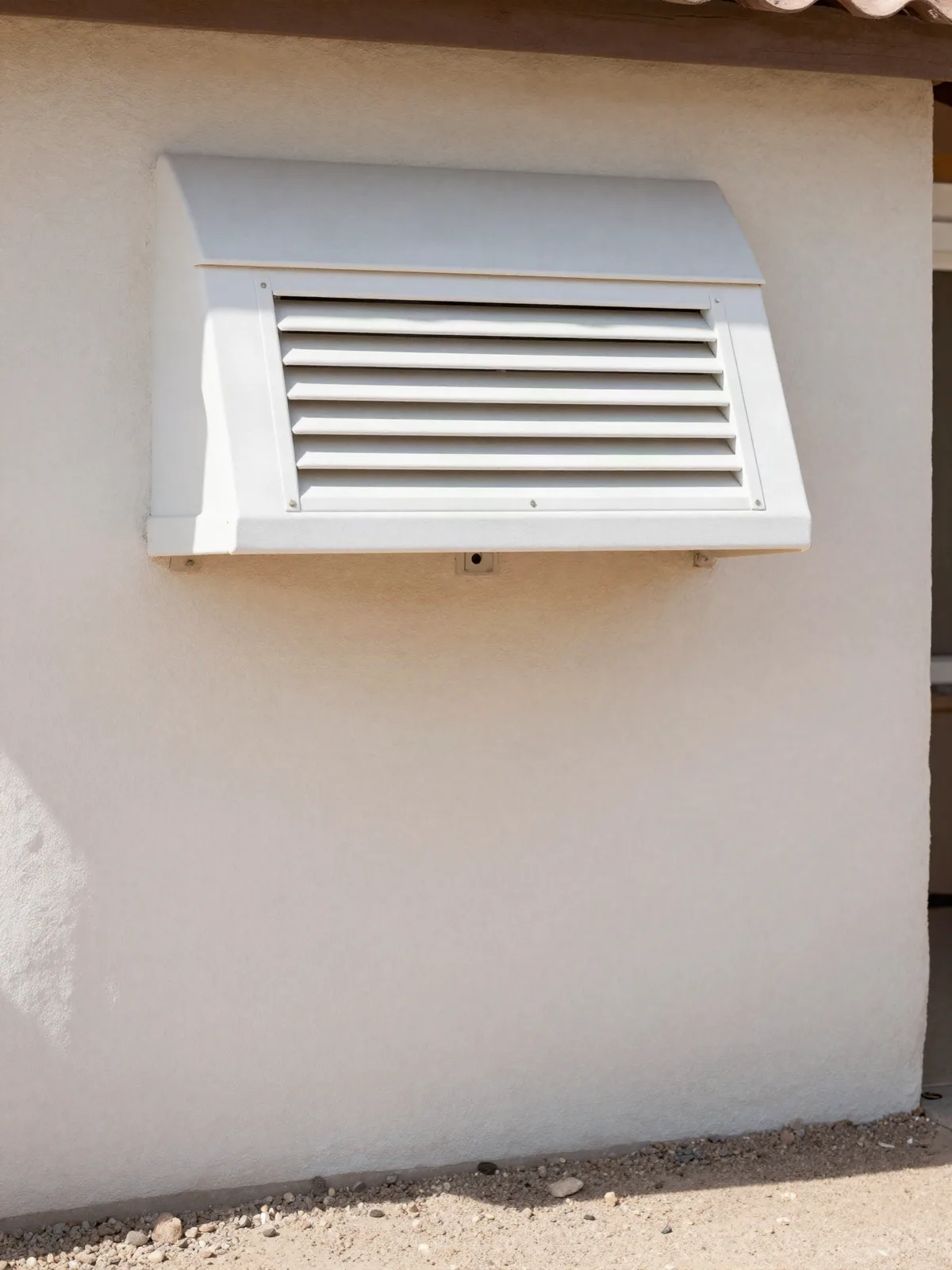
Put the dryer on and walk outside to the hood. You are looking for two things. Is the flap or damper open, and can you feel a decent push of warm air coming out of it?
A damper that stays shut, or a weak trickle of air where there should be a steady push, means the line behind it is restricted. Lint caught around the hood itself is the same story from the outside.
Check two: the hose behind the machine
Pull the dryer forward far enough to see the flexible hose at the back. Two problems are common and both are visible in a second.
The first is crushing. If the machine has been pushed back hard against the wall, the hose gets folded flat behind it, and a flat hose carries very little air. The second is the type: a thin foil or plastic accordion hose is worse at both airflow and lint than a rigid or semi-rigid metal one.
What a cleaning does about it
Clearing the line means the whole run, not the first accessible stretch: the transition hose, the takeoff where the line leaves the room, every bend, and the hood and its damper at the far end. The bends are the point. A line cleared up to its first elbow will be blocked again quickly, because the elbow is where the lint was.
The last step matters as much as the first: with the dryer running again, check the hood outside and confirm air is actually leaving the house.
One thing worth saying plainly
Lint is flammable and a blocked vent line is worth dealing with rather than living with. Anyone who attaches a guarantee to cleaning it, though, is selling you something other than the cleaning. A clear line is a clear line, and that is the honest version of the claim.
More guides
- September 15, 2026
What builds up in an Arizona air duct
Desert dust, remodel debris and pet hair each end up in a different part of the system. Here is where to look, and what you can check without any tools.
Read the guide · 5 min read
- September 15, 2026
What duct cleaning does and does not fix
Cleaning removes what is sitting in the ducts. It is not a repair, not a fix for poor airflow, and not a medical treatment. Here is the line between the two.
Read the guide · 5 min read
Clean ducts. Clean vents. Cleaner airflow.
Send the address and what you want cleaned. The quote is free and there is no obligation after it.
374 7702 East Doubletree Ranch Rd., Suite 300, Scottsdale, AZ 85258